How to “Imagineer” your future in six steps

Imagineering your future
By David Lim for CFO magazine
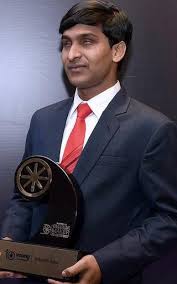
I was seeking some mid week inspiration. And then my newsfeed on Facebook had a fascinating article on Srikanth Bolla.
david lim leadership blog
If you are based in India, you might be more familiar with his story. Srikanth runs, amongst other things Bollant Industries, a successful company with US$4 million in annual revenues only five years after he established it. If you think someone in his or her mid-20s achieved this, you might be impressed. You might even me more impressed to find that he was born blind, and whose parents were advised at an early stage to smother him as an infant to avoid the misery he would face as a blind person. He aced his school board exams but was denied a place at one of the famous Indian institutes of technology owing to the assumption that he could not be a fit, being blind. He then became the first blind international student to be accepted into the prestigious Ivy-league Massachusetts Institute of Technology.
I re-tell his story that if you want to start an “Imagineering” initiative at work or in your life, one of the six the key things you need to consider is getting some inspiration something that might excite for a day or even a lifetime. Little nudges that help you overcome bouts of low-energy or low morale
Second – when re-thinking the future, I highly recommend some daydreaming. Not some organic day dreaming at your desk, but something that you practice consistently – on a daily walk or run. Quieting the mind, and just dream of your future or a future goal. Think of what might be possible, toy with the idea, who else might be involved, and what it would deliver to you both materially and spiritually. I’ve written about the virtues of doing absolutely nothing at al sometimes. This is because we need some mental ‘space’ to allow ourselves to dream and wonder. Far from being a useless activity, daydreaming can produce some of your best ideas.
Third, you might come to grips with it by them imagining a perfect world in a specific area of your life. It could be raising the standard of your workplace team, achieving something consistently. What would it look like, smell like, and feel? Give your perfect world texture, shape and meaning.
In the field of Solutions Focus (SF), work team or individuals approach a set of challenges or a process in making something by using some of these techniques I am describing. Traditionally in fields like engineering and manufacturing; people are trained to approach issues from a “problems” focus, and using a “root cause analysis” when things aren’t developing into their ‘perfect world’. But in an SF world, the way issues are approached is completely different. You imagine a future perfect world/situation, and then do the fourth thing here:

You discover what is working first. This is because no problem or issue preventing you from achieving your desired result exists all the time. In fact sometimes, you near perfect outcome happens from time to time. When I was helping Rane Group in Chennai improve some of their leadership processes, I used a SF approach. Instead of focusing on what went wrong; especially in things that seem to happen ever so often, I suggested they focus on when things were working well. They should look at the “gems” that were noticed. What were people doing well and correctly to deliver that outcome? Now, the traditional root cause analysis might work at times. But for more intractable or more subjective problems like shop-floor attitudes, adopting an SF focus might work better. This is because by not assigning fault or blame, you avoid defensiveness in parties concerned. SF doesn’t use “problem language” like “who’s to blame” or “why did this go wrong” but focuses on “solutions language” like “what did we do well last week to achieve that outcome?” You find the gems and apply them more consistently.
Fifth in your Imagineering process, take small steps. Very often when we are “Imagineering” a perfect world, we are overcome by the vastness of the challenge or task. But if we chunk down the process into bite size pieces and work on them in smaller pieces, the results you want will emerge. Habits for example, that helps us reach a goal. Habits can be some of the “gems” I mentioned earlier if these observable behaviours support the ultimate new world we are seeking
Sixth and key to supporting the fifth point is “scaling”. Suddenly, you vast problem or challenge can be ring-fenced onto a scale. You can ask yourself some questions to help you here – for example, a questions could be “On a scale of 1-10, with 1 being hopeless incompetence and 10 is award-winning work team, where are you and your team now?” With each re-visit of this process, you can help ‘scale’ where you are in this journey. But it’s not enough just to ask questions about numbers – you need to ask questions that invoke change. For example “ Wow – a ‘five’ on this – what do you think you need to do to nudge this up to a ‘six’?” This helps precipitate shifts in action and a level of commitment. Good luck in trying out these approaches to “imagineer” your future.
David Lim is Asia’s Motivational Mentor, and best known for leading the 1st Singapore Mt Everest Expedition. Since 1999, he has helped organizations motivate teams and grow leaders. Engage him with questions at contact@davidlimspeaks.com
–