The fine line between success and failure
The fine line between success and failure: 3 tips in helping you redefine success
By David Lim for CFO Magazine

MB Tamang on the mauvais pas section on Chulu Far East
This year’s main climbing season for Everest has ended. Each year, like the Olympics, it brings its own set of dramas, stories and tragedies.
Ten years ago this Spring, two men were given up as lost on Everest. One died, and one eventually made a near-miraculous recovery to return home safely. Both men were known to me personally. For David Sharpe, he did not return home. He had climbed alone, with little support from his erstwhile team-mates, who were themselves splintered into a number of sub-teams, with no social compact to work together. On his descent via the north ridge on Everest in Tibet, he weakened and lay dying on a day when 40 climbers from around the world walked by. Some later claimed ignorance of his true physical condition; some claimed knowledge but professed a lack of ability, or resources to organise a rescue. But most appeared to have enough drive and energy to plod on to the summit.
The other climber, Lincoln Hall, was given up as lost and unable to survive by his exhausted sherpa team-mates. He was declared dead shortly after – only to be found still alive by American guide, Dan Mazur and his team. Dan cancelled the summit attempt, contacted Lincoln’s team , which then organised a massive, and dramatic rescue operation. This eventually saved Lincoln’s life. Would you say Dan’s team was successful? Probably not if you defined the goal of success of the expedition as getting to the top. But life is never quite so simple, and our best failures are often our biggest learning opportunities, or points of reflection on how we can define and redefine what success means to us.
In rating ourselves as ‘ successes’ or ‘ failures’, here are THREE tips in helping you keep your morale in the face of any obstacle.
1) You decide what your parameters of success are going to be.
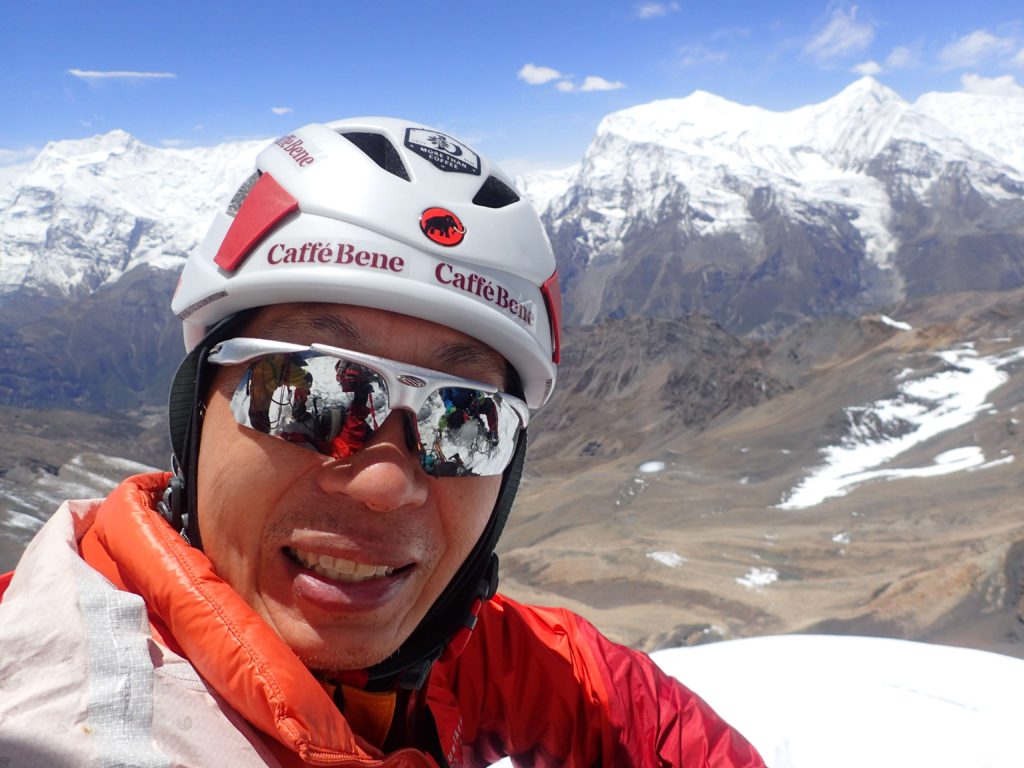
For most serious mountaineers, the quality of the experience (the ” journey” bit) which might include good companions, technical challenge, beauty of the route/peak – counts for a lot. The summit is important too, at times. But as so many things beyond our control can thwart us from this, we have to ask ourselves what else is important. This Spring, after a 14-year hiatus from climbing there, I returned to Nepal to be reunited with my Tamang buddy MB, to attempt a bold 4km traverse over two virgin peak. Snow conditions thwarted the complete traverse. We did , however, knock off a straightforward 6000m peak. By NOT defining success too narrowly, we aren’t trying to kid ourselves or to blur the line between failure and success. Instead, we are creating MORE options to consider in the greater scheme of things
2) You decide your timeframe of success
How time sensitive is your goal? If you fail at a set of examinations, is it truly ‘final’ and no re-sits are possible? Or are their other choices? Stretching your timeframe in accepting a set of results allows you to re-frame failure as merely a lesson in how to succeed next time or to do things better. As mountaineers sometimes say, ” There is no failure, just a lack of time [to get to the top] “. Unless you have an open return air-ticket home, many expeditions have to quit a climb because many climbers need to return to their everyday jobs and responsibilities. This is not due to a lack of ability or will to climb to the top.

Caffe Bene’s Himalayan Traverse Expedition 2016 – on the summit!
3) You decide what you accept as your higher values.
On Everest this year, many climbers will choose to go for their personal goals at the expense of time and effort to participate or share in rescue efforts. Much of these decisions were not necessarily cold-hearted, but more to do with the ‘bystander paralysis effect’ – everyone hopes someone else will pick up the responsibility and burden/sacrifice in helping. A lack of cohesion between teams and decisive leadership were also contributing factors. Strong emotions and a commitment to a sough-after goal can be tempered with higher values.
Before any major life challenge, you have choice – to live your life, and express daily behaviours based on your higher values. I hope these values are aligned with your calling, and that you have the wisdom to make the right decisions.
You may notice that each of those THREE tips have nothing to do with anyone else but YOU. Life is about choices and self-accountability. Did Dan Mazur make the right decision? I think he did. As he was quoted afterwards, Lincoln Hall had only one life, but you can always go back to Everest. This Spring, I had a fabulous return to climbing in Nepal, and at 52 years of age, topped out yet another 6000-metre summit, relived old climbing memories from five 8000m peaks adventures with MB Tamang, and came back with all my fingers and toes. Not too bad.
David Lim is Asia’s Leadership Guide, and best known for leading the 1st Singapore Mt Everest Expedition. Since 1999, he has helped organizations build teams and grow leaders. Send him a note today at contact@davidlimspeaks.com to subscribe to his leadership e-newsletter or inquire about his organisational solutions